
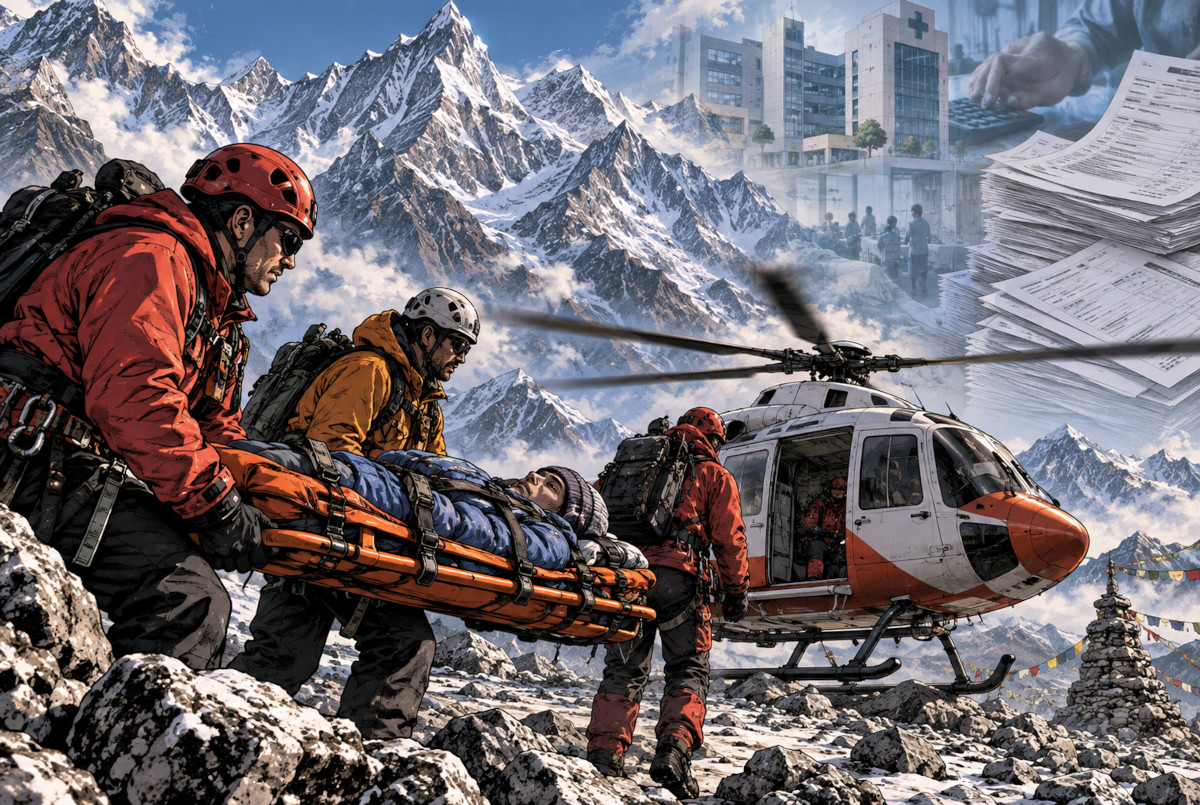
In the Himalayas, a helicopter evacuation can be the difference between life and death. A trekker develops severe altitude sickness or suffers an injury in a remote mountain region, and a rescue helicopter gets them to medical care within hours. There is nothing strange about that. It is exactly what mountain rescue is supposed to do.
But in Nepal, investigators say that lifesaving system was also exploited as a way to extract money from overseas insurance companies.
On January 25, 2026, Nepal Police’s Central Investigation Bureau (CIB) arrested six people linked to rescue and travel businesses as part of an investigation into alleged organized fraud involving foreign trekkers. The investigation later expanded across trekking businesses, rescue operators, aviation, hospitals and other intermediaries. On March 22, cases were filed against 32 defendants. A 33rd defendant was formally charged in April, and by June all 33 were under a second-stage money-laundering investigation.
These are criminal allegations, not convictions. But the structure described in the investigation is striking enough without exaggeration.