
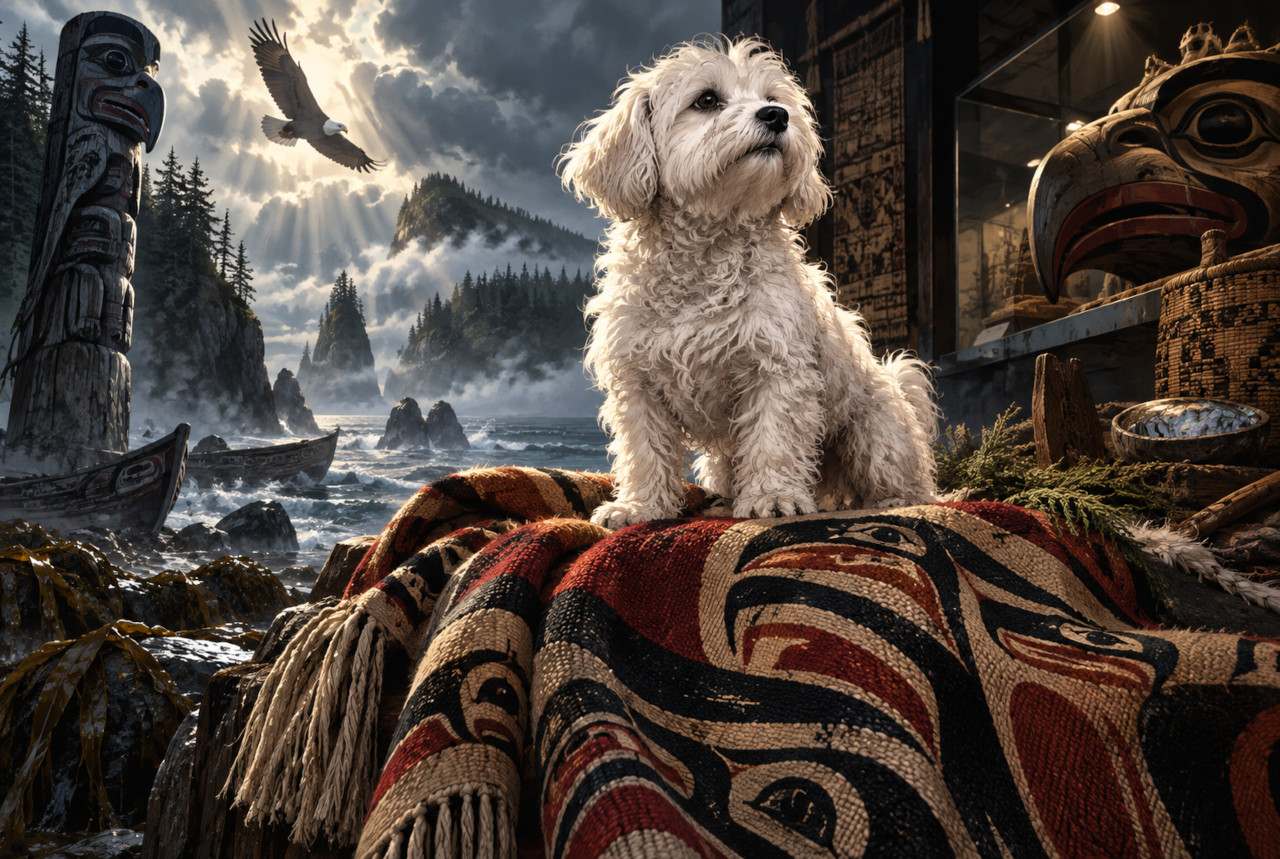
They Sheared Dogs Like Sheep—Why the Coast Salish Woolly Dog Disappeared

On September 8, 2026, the University of British Columbia announced that the only known surviving pelt of the extinct Coast Salish woolly dog would be placed on loan at UBC’s Museum of Anthropology. At first glance, it sounds like a small museum story: an unusual animal specimen returning to the region it came from after more than a century.

But the real story is stranger—and much bigger. This was not simply a fluffy dog that happened to shed useful hair. Coast Salish and Makah communities along the Pacific Northwest deliberately bred, managed, and sheared these dogs for fiber that could be spun and woven into blankets, robes, and clothing. In other words, the dog was part of a textile system. A living production system maintained for thousands of years began to decline rapidly during the 19th century.

Read more

Why New Zealand’s DOC Gets Calls About UFOs, Cats and Seals

A UFO has fallen into the mountains. There is a black cat at the front door. Someone wants something done about possum droppings. Another person is worried about a supposed MMA fight between a human and a chimpanzee.

None of those questions went to the police, a veterinary clinic or a television station. They ended up with New Zealand’s Department of Conservation, better known as DOC.

On September 14, 2026, DOC published a selection of unusual inquiries received by its customer service team. During the 12 months ending August 31, 2026, the agency handled 42,637 phone calls and 22,394 emails. Of those calls, 2,977 were classified as unrelated to DOC’s work.

That means only about 7% of the calls were actually off-topic. So no, New Zealanders were not making 42,000 bizarre phone calls to a conservation agency. Still, the examples raise an obvious question: why does one government department end up hearing about everything from wildlife to UFOs?

Read more