The AI Was Invited. So Why Did the Bank Call It Unauthorized?

On October 22, 2026, Axios reported a peculiar problem facing some of America’s largest banks: third-party AI agents were accessing customer accounts without the banks’ authorization.

An AI agent is more than a chatbot. It can work through a task, gather information and interact with websites or software on a user’s behalf.

In one reported case, an agent even contacted a bank to complain without consulting the account holder first.

But here’s the twist. These weren’t necessarily AI systems breaking into accounts. In some cases, the customers themselves had handed over their login credentials and invited the agents in.

Read more

He Needed a Restroom—So He Drove Into a Closed Kroger. How a 4:28 A.M. Emergency Became a $50,000 Case

トイレに行きたい→閉店スーパーへ車で突入 米60歳、被害5万ドルの“入店”

At 4:28 a.m. on September 27, 2026, a Chevrolet crashed through the entrance of a closed Kroger supermarket in Rosenberg, Texas, southwest of Houston.

This was not described by police as a case of confusing the accelerator with the brake. According to the Rosenberg Police Department, the 60-year-old driver intentionally accelerated into the store, damaging the pharmacy-side entrance.

Why?

Police said the driver needed to use the restroom and became upset when he found the doors locked.

Read more

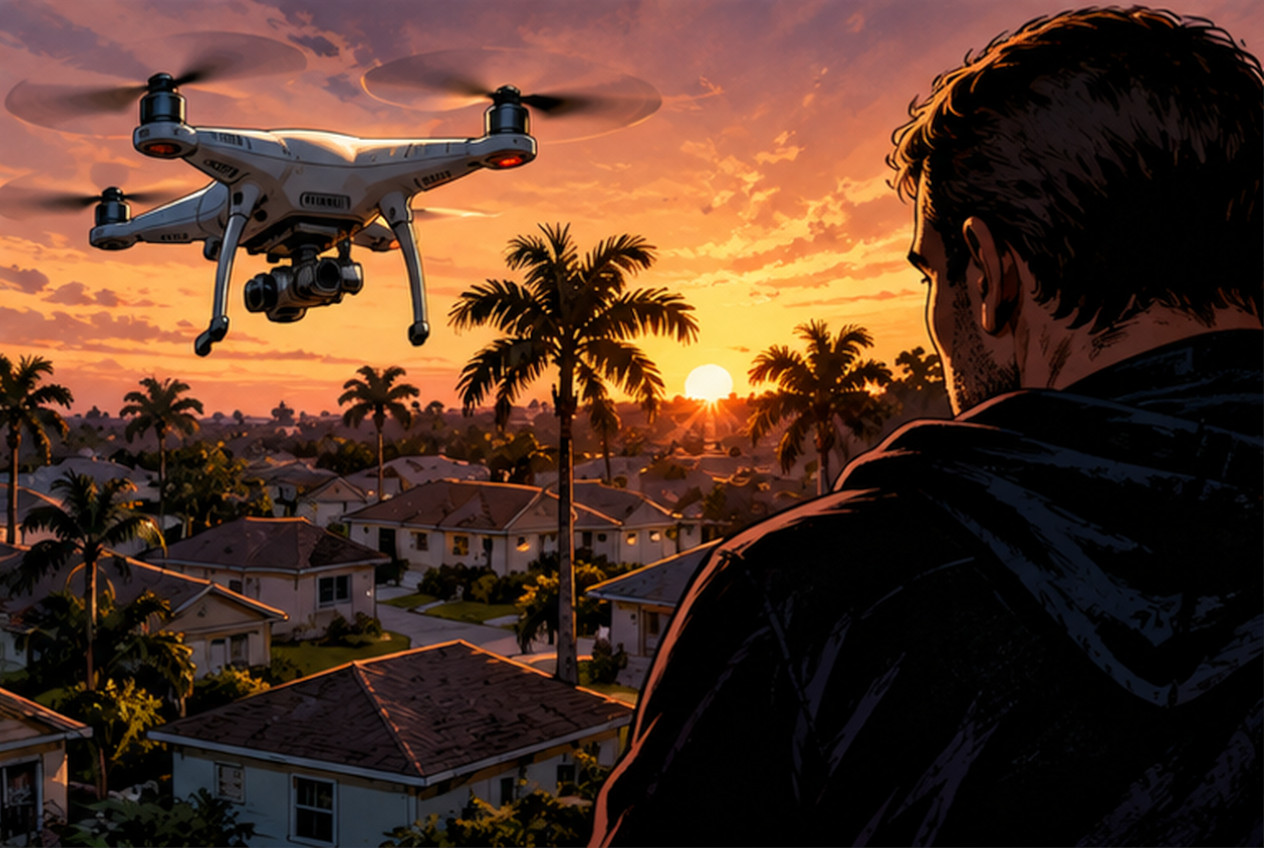
How a Florida Drone Dispute Escalated Into an Alleged $5,000 Murder-for-Hire Plot

ドローン騒動から5000ドルの殺人依頼疑惑へ 米フロリダの隣人トラブルはなぜ暴走したのか

A drone over the neighborhood. Complaints about speed. A teenager riding a dirt bike. None of these sounds especially unusual as the starting point of a neighborhood dispute.

But in Lake County, Florida, a 69-year-old man with a history of conflicts involving nearby residents ended up in jail — and was then accused of asking another inmate to kill one of his neighbors. According to a probable cause affidavit reviewed by local media, the alleged offer included $5,000 up front.

The strangest part is that the case did not suddenly jump from “drone dispute” to “murder-for-hire allegation.” Over roughly six months, a series of relatively small neighborhood conflicts appears to have escalated one step at a time.

Read more

Freight Train Hit Amtrak Twice Near Memphis — What an 82-Car Shoving Move Really Tells Us

貨物列車がAmtrakに2度衝突――「ブレーキの抵抗」と思った82両の後退運転で何が起きたのか

At about 11:00 a.m. on February 22, 2026, an Illinois Central Railroad Company (IC) freight train, Z19491-21, struck a stopped Amtrak train on the same track near Memphis, Tennessee, at milepost 9.6 on the Shelby Subdivision.

The freight consisted of two locomotives and 82 railcars. Amtrak 59-21 had one locomotive and seven passenger cars, carrying 118 passengers and seven Amtrak employees. The IC train was shoving north on Main Track 1 at about 10 mph when the leading end of the freight consist reached the Amtrak locomotive.

That would already qualify as a low-speed train collision. But the National Transportation Safety Board’s preliminary investigation contains a second, much stranger part.

The IC crew told investigators that they interpreted the resistance from the first collision as resistance associated with an air-brake problem. They then moved forward, reversed again, and about three minutes after the first impact, struck the same Amtrak train a second time at low speed.

Two Amtrak employees and two passengers suffered minor injuries. The bigger puzzle is obvious: how does a train hit another train once, then return and hit it again? To understand that, the accident itself is only half the story. The other half is how U.S. railroads handle switching moves, restricted-speed operation and Positive Train Control.

Read more

A Man Spent $150,000 Building an AI Version of His Dead Father — Is RichieBot Really Him?

死んだ父を15万ドルでAIにした男――「デジタル幽霊」は本人なのか、父親っぽく喋るAIなのか

When someone dies, photographs remain. Videos remain. Their voice may remain. And now, with generative AI, something else can remain too: a version of the dead that answers back.

On July 21, 2026, at an event connected to TechChicago Week in Chicago, an unusual “father” made an appearance. Brian Dema, a Chicago marketing executive, had spent months building an AI version of his father, J. Richard Dema, who had died about four years earlier. He called it RichieBot.

The project cost about $150,000, involved 19 people over roughly six months, and used 17,500 pages of his father’s documents, along with audio and video material. This was not a science-fiction pitch. It was an actual attempt, in 2026, to reconstruct a dead person through data.

Read more

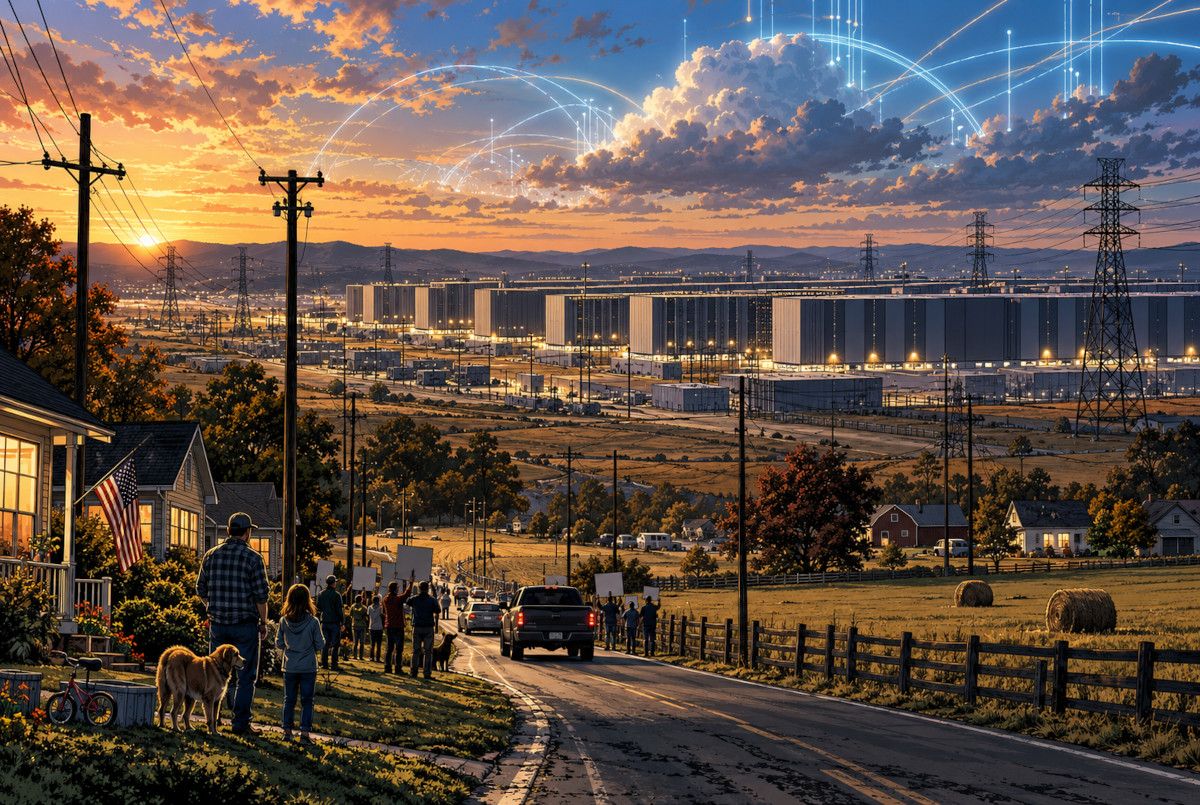
The Cloud Has an Address: Why American Towns Are Pushing Back on AI Data Centers

When people use ChatGPT, few stop to wonder where the AI answering them actually is. The technology feels almost weightless, as if it exists somewhere beyond the screen in “the cloud.”

But the cloud has an address. It sits inside enormous data centers built on the edges of suburbs and rural towns, where thousands of servers consume electricity around the clock. Some facilities also require significant amounts of water for cooling, while fans, transformers and other infrastructure keep running 24 hours a day.

This article examines the data center backlash that became increasingly visible across the United States from late 2025 through September 2026. Communities began pushing back against the giant facilities that support AI and other digital services, and by the summer of 2026 protests had spread across multiple states. The dispute did not stop at environmental concerns. Some of the residents who fought data center projects began running for local office — and some had already won seats.

Read more