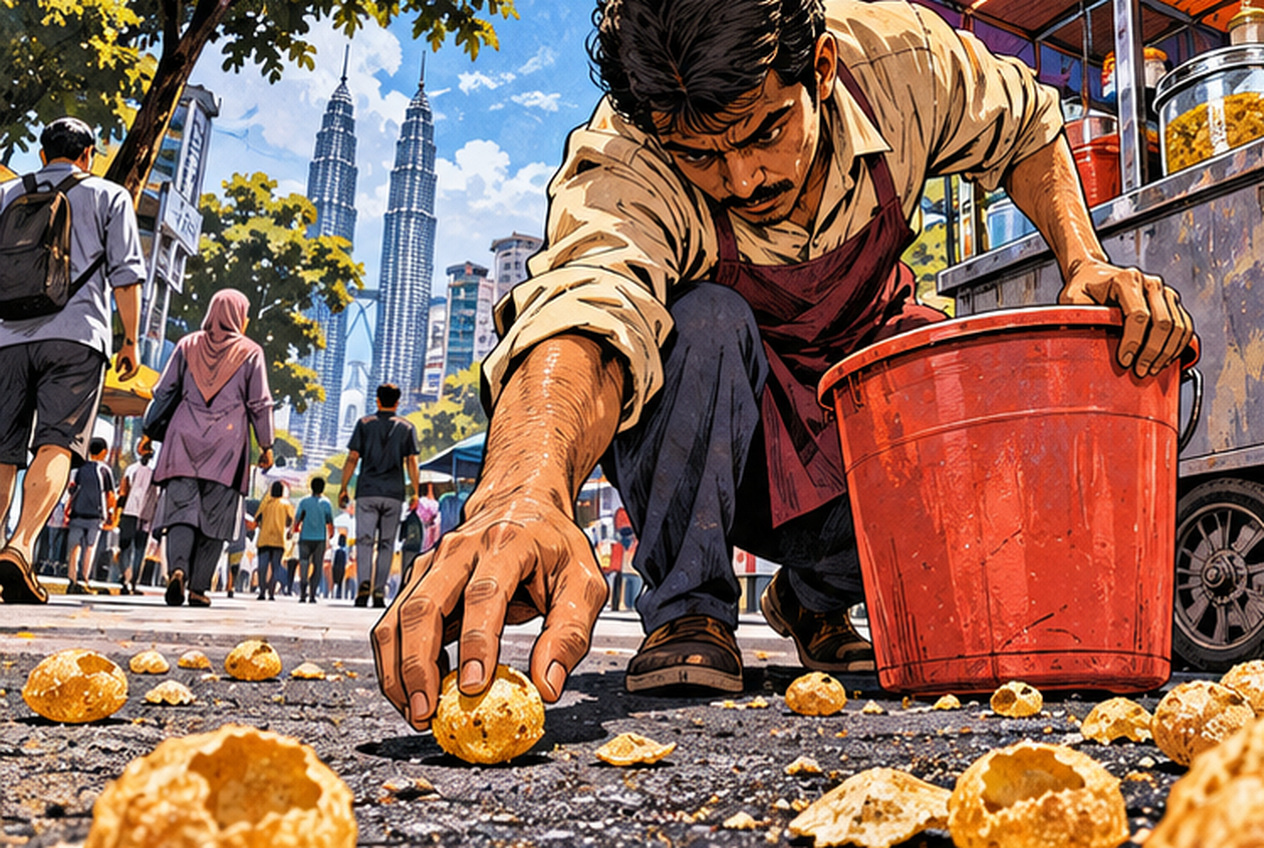
On October 25, 2026, a video allegedly filmed in Kuala Lumpur, Malaysia, began attracting attention on social media. It showed something no street-food customer wants to see.
In Brickfields, a neighborhood known for its Indian shops and restaurants, a batch of panipuri shells had reportedly spilled onto the road near the NU Sentral shopping mall. The exact date of filming has not been established.
A person believed to be a food vendor was then seen picking up the scattered shells, one by one, and putting them back into a bucket.
For some viewers, this was street food taken a little too literally. Others were more concerned: were those same shells going to end up on customers’ plates?
But there is an important gap in the story. Local reporting confirms that the food was picked up and returned to a bucket. It does not establish that the food was subsequently sold to a customer.
That distinction is worth examining. So is the science of dropped food, and what Malaysia’s food hygiene regulations actually require.
First, what exactly is pani puri?
Pani puri, often written as panipuri, is a popular Indian street snack also known in different regions as golgappa or puchka.
It consists of a small, crisp, hollow fried shell. A hole is made in the top, and the shell is filled with ingredients such as potatoes and chickpeas, along with tangy, spiced water flavored with herbs and other seasonings.
The result is a crunchy, savory snack usually eaten in a single bite.
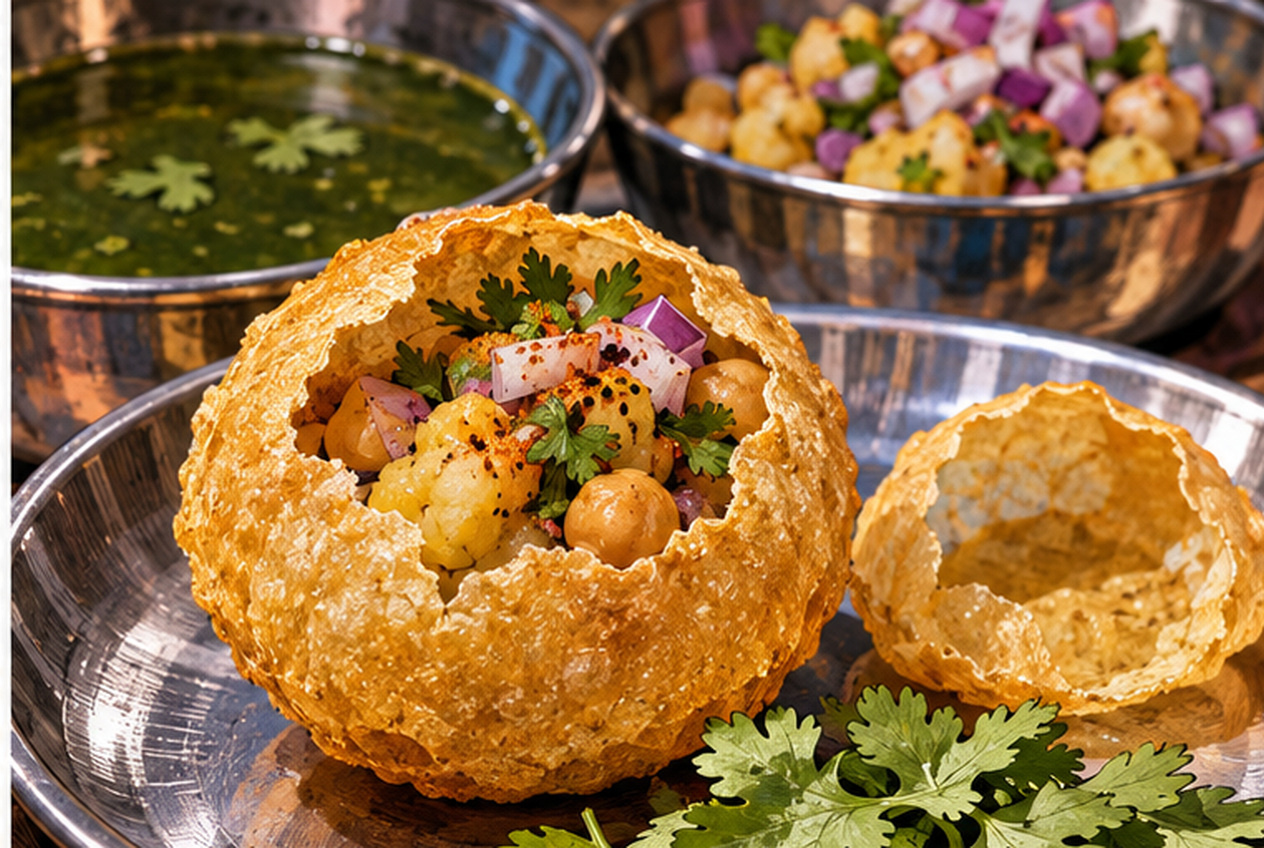
According to the accounts of the Malaysian incident, the items that fell onto the road were the dry, unfilled shells.
That matters. The vendor had not spilled a finished dish or a bowl of flavored water. The shells were food products intended to become part of a dish served to customers.
Picking up the food is not proof that it was sold
On October 26, Malaysian news outlet Focus Malaysia reported on the circulating video. The footage, shared on X the previous day, showed a person collecting panipuri shells from the road and returning them to a bucket.
A separate eyewitness account, reproduced in a Reddit post, went further. The person claimed to have seen the fallen shells being put out for sale again.
Those two accounts are not quite the same thing. To understand why, it helps to separate what was reported as visible in the footage from what was alleged by the eyewitness.
| Action | What the available evidence establishes |
|---|---|
| Picking up panipuri shells from the road | Described in local reporting of the video |
| Putting the collected shells back into a bucket | Described in local reporting of the video |
| Putting the shells back out for sale | Claimed in an eyewitness account; not independently verified |
| Actually selling the fallen shells to a customer | Not established by the available footage or reporting |
Focus Malaysia explicitly noted that the footage did not show whether the vendor went on to sell the collected food. The same report also appeared on SME.com.my, but that publication reproduced the Focus Malaysia article. It should not be treated as an independent confirmation.
There is an eyewitness allegation that the shells were returned to the merchandise. There is no independently verified evidence in the available reports that a customer actually bought them.
That does not prove the vendor discarded the food, either. The shells may have been thrown away later, kept separately, mixed with other stock or handled in some other way. The published material does not establish what happened next.
There is another reason for caution. Some online reactions speculated about the vendor’s nationality or immigration status. Those claims do not establish anything about the handling of the food, and the available evidence does not justify treating them as facts.
Does the five-second rule make any difference?
There is an old popular belief that food dropped on the floor is safe if you pick it up within five seconds. It sounds convenient, particularly when the food looks perfectly fine.
But researchers at Rutgers University tested that idea in 2016, with results that make the rule rather difficult to defend.
The researchers examined four surface types, four foods, four contact times and two bacterial preparation conditions. That produced 128 different experimental scenarios, each repeated 20 times: 2,560 measurements in total.
The foods included watermelon, bread, buttered bread and gummy candy. The surfaces included stainless steel, ceramic tile, wood and carpet. Contact times ranged from less than one second to 300 seconds.
The important finding was not that every dropped item instantly became dangerous. It was that bacteria could transfer from a surface to food in less than one second under some experimental conditions.
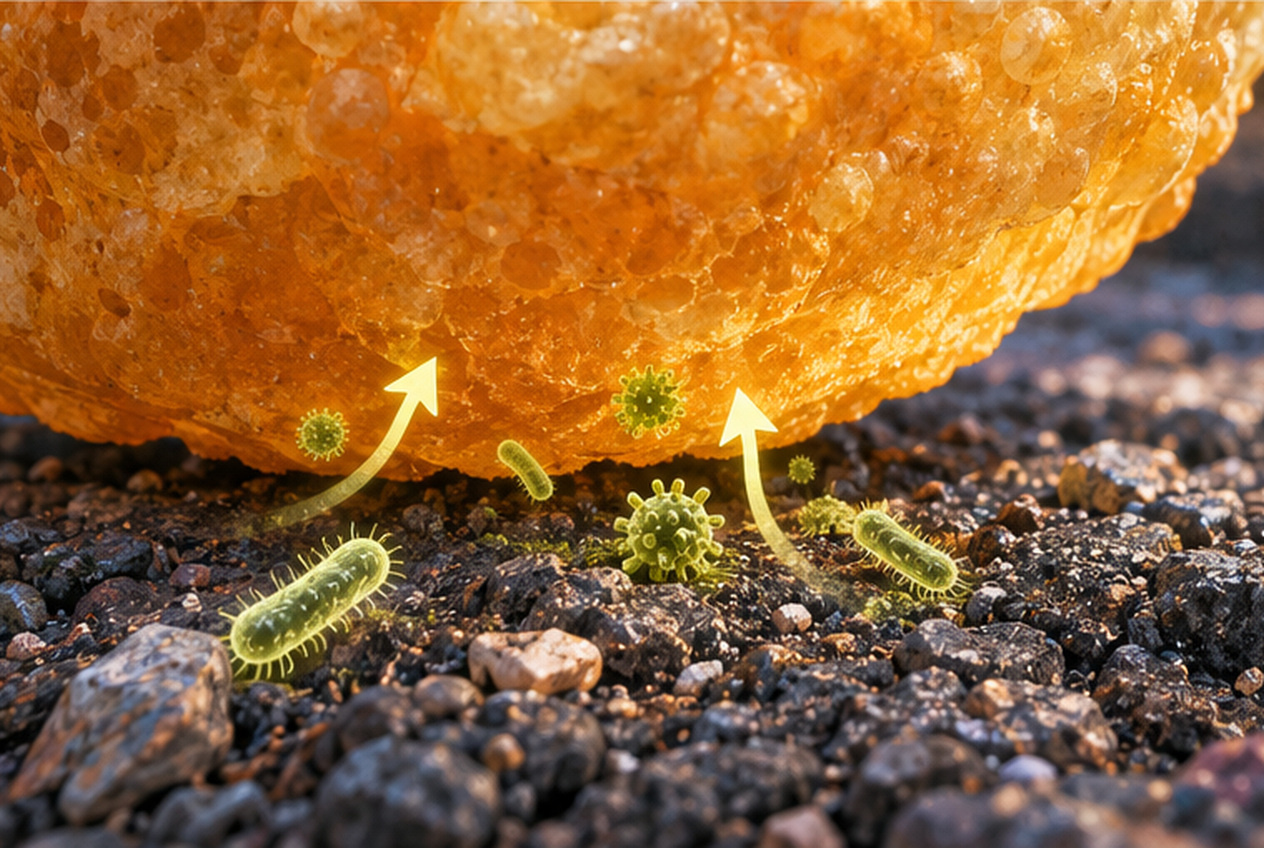
Conceptual illustration of microbial transfer. It does not depict laboratory findings from the actual incident.
Longer contact generally increased bacterial transfer, but moisture, the food itself and the surface material also made substantial differences.
A dry panipuri shell is not the same as a piece of wet watermelon. That means the study’s measured transfer rates cannot simply be applied to this incident.
Still, dryness does not guarantee safety. A public road can expose food to dust, grit and other foreign material as well as microorganisms.
No laboratory test of the shells involved in this incident has been identified. We cannot determine whether they carried harmful bacteria, or how much contamination, if any, occurred.
What the research does establish is simpler: five seconds is not a scientifically validated safety boundary.
What do Malaysia’s food hygiene regulations say?
Malaysia regulates food handling under the Food Act 1983 and the Food Hygiene Regulations 2009. Street-food businesses are not exempt from basic food hygiene requirements simply because they operate outdoors.
Regulation 35(1)(a) requires food handlers to prevent food from coming into direct contact with materials or substances that may contaminate it.
Regulation 36(1)(a) addresses contamination during food preparation, packing and serving. Regulation 36(1)(j) also restricts the use of raw materials or ingredients that may contain harmful microorganisms, foreign substances or other contaminants capable of making the finished food unfit for consumption.
Breaches of the relevant provisions of Regulations 35 and 36 can, upon conviction, carry a fine of up to 10,000 Malaysian ringgit (RM10,000) or imprisonment for up to two years.
There is a timing detail worth noting. Malaysia published the Food Hygiene (Amendment) Regulations 2026 in June, but the amendments are scheduled to take effect on December 1, 2026. The provisions of Regulations 35 and 36 discussed here were not amended by that instrument. As of November 1, the existing rules remain applicable.
None of this means the person in the video has been convicted of an offense, or that an enforcement action has been confirmed.
The key distinction is that a food hygiene concern does not necessarily begin only when a customer makes a purchase. Reusing potentially contaminated food for sale could raise regulatory issues even without proof of a completed sale.
Whether that happened here is another matter. As of November 1, 2026, no verified public information has established the vendor’s licensing status, any official inspection, or the ultimate disposal or use of the collected shells.
This has happened before—but the reaction was different
In August 2022, Indian broadcaster NDTV reported on another viral video involving panipuri shells scattered across a road.
The footage showed a street vendor picking up fallen golgappas. According to NDTV, the video had attracted more than 11.8 million views.
But that story developed in an interestingly different direction. Much of the online criticism was aimed not at the vendor, but at the person filming him instead of stopping to help.
The person who shared the clip explained that the intention was to highlight the struggles of small street vendors.
Compare that with the 2026 Brickfields incident. This time, attention centered on whether food collected from the road might have been sold to unsuspecting customers.
Similar footage can lead to very different public judgments depending on the surrounding account, the caption and the assumptions viewers bring to it.
The 2022 incident offers no evidence about what happened in Kuala Lumpur four years later. Its value is in showing how the meaning attached to a short video can change before the underlying facts are fully established.
So did the road-swept pani puri reach anyone’s plate?
Based on the information available as of November 1, 2026, there is no verified footage or official announcement establishing that a customer was sold the fallen shells.
At the same time, the eyewitness allegation has not been conclusively disproved. The available evidence supports neither a confirmed sale nor a definitive claim that the food was discarded.
The shells fell onto the road. Someone collected them. What happened after that remains unresolved.
There is a broader issue beneath the absurdity of the scene. Customers usually have no practical way of knowing what happened to a food item before it reached the counter.
That is why hygiene rules cover the handling and preparation of food, not just the moment money changes hands.
The most useful lesson from this strange street-food story may be about evidence as much as hygiene: a video can reveal something troubling without necessarily telling us how the story ended.
Editor’s Note
If I drop a cracker on my own kitchen floor, I might spend a second negotiating with myself over whether it’s still edible. That’s my decision, and my floor.
But selling food to strangers is a different arrangement. Customers never agreed to take part in that little negotiation.
What really gets me about this video, though, is where the story stops. We see the shells being collected and returned to a bucket. Then the most important part—what happened to them afterward—is missing.
If they were sold, that would be a serious hygiene concern. But making up the missing ending because it seems obvious is hardly good reporting, either.
Food handling and online storytelling have something surprisingly similar in common: the part you cannot see may be the part that matters most.
References
- Focus Malaysia (October 26, 2026): Roadside panipuri incident leaves netizens questioning the meaning of “street food”
- Reddit, r/Bolehland (October 2026): Reposted eyewitness account and discussion of the panipuri incident
- Ministry of Health Malaysia: Food Hygiene Regulations 2009 (official information)
- Food Hygiene Regulations 2009, P.U. (A) 95/2009: English legal text, Regulations 35 and 36 (FAOLEX)
- Federal Government Gazette of Malaysia: Food Hygiene (Amendment) Regulations 2026, P.U. (A) 227
- Rutgers University (September 8, 2016): Rutgers Researchers Debunk “Five-Second Rule”
- Miranda, R. C., and Schaffner, D. W. (2016): Longer Contact Times Increase Cross-Contamination of Enterobacter aerogenes from Surfaces to Food
- NDTV (August 3, 2022): Watch: Man Picks Up Golgappas From Road, Internet Slams Instagram User Who Shared Clip