
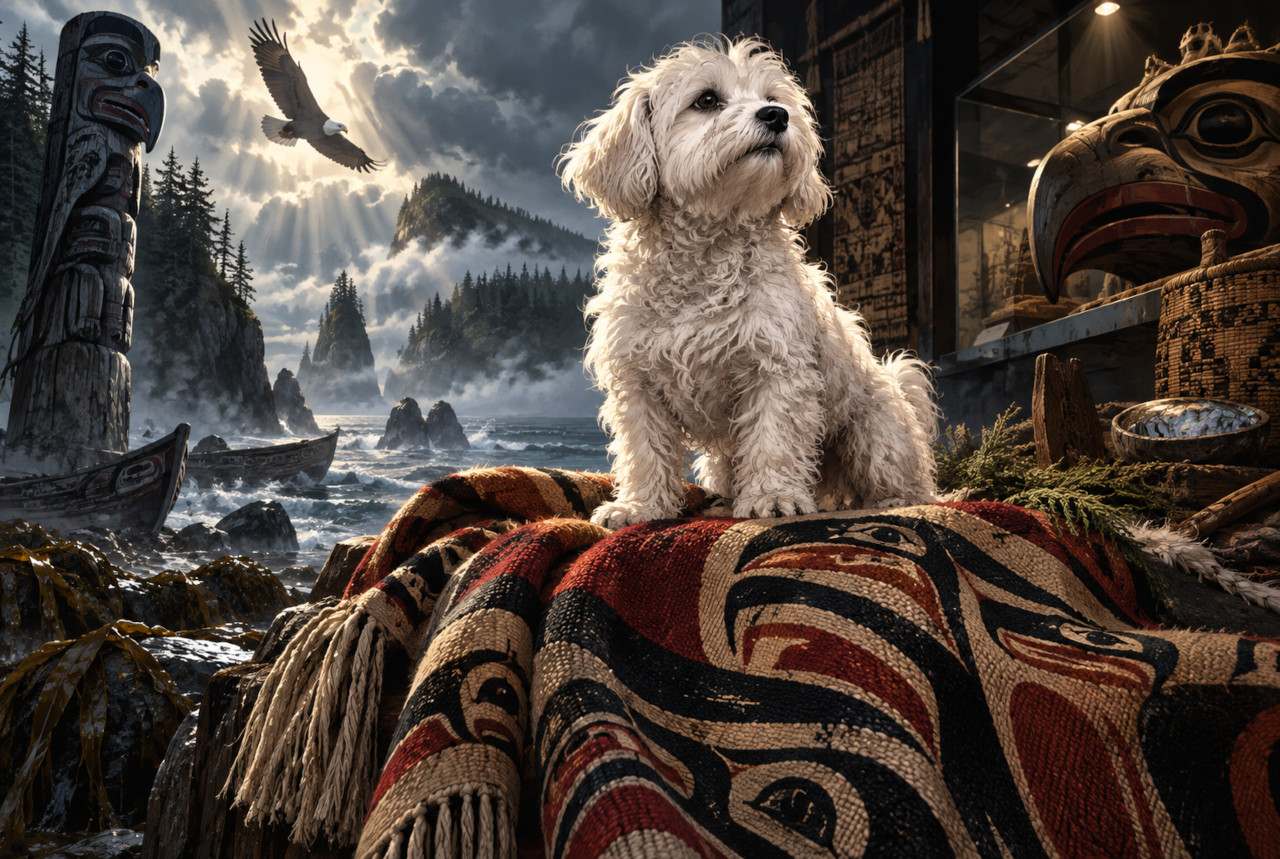
On September 8, 2026, the University of British Columbia announced that the only known surviving pelt of the extinct Coast Salish woolly dog would be placed on loan at UBC’s Museum of Anthropology. At first glance, it sounds like a small museum story: an unusual animal specimen returning to the region it came from after more than a century.
But the real story is stranger—and much bigger. This was not simply a fluffy dog that happened to shed useful hair. Coast Salish and Makah communities along the Pacific Northwest deliberately bred, managed, and sheared these dogs for fiber that could be spun and woven into blankets, robes, and clothing. In other words, the dog was part of a textile system. A living production system maintained for thousands of years began to decline rapidly during the 19th century.