
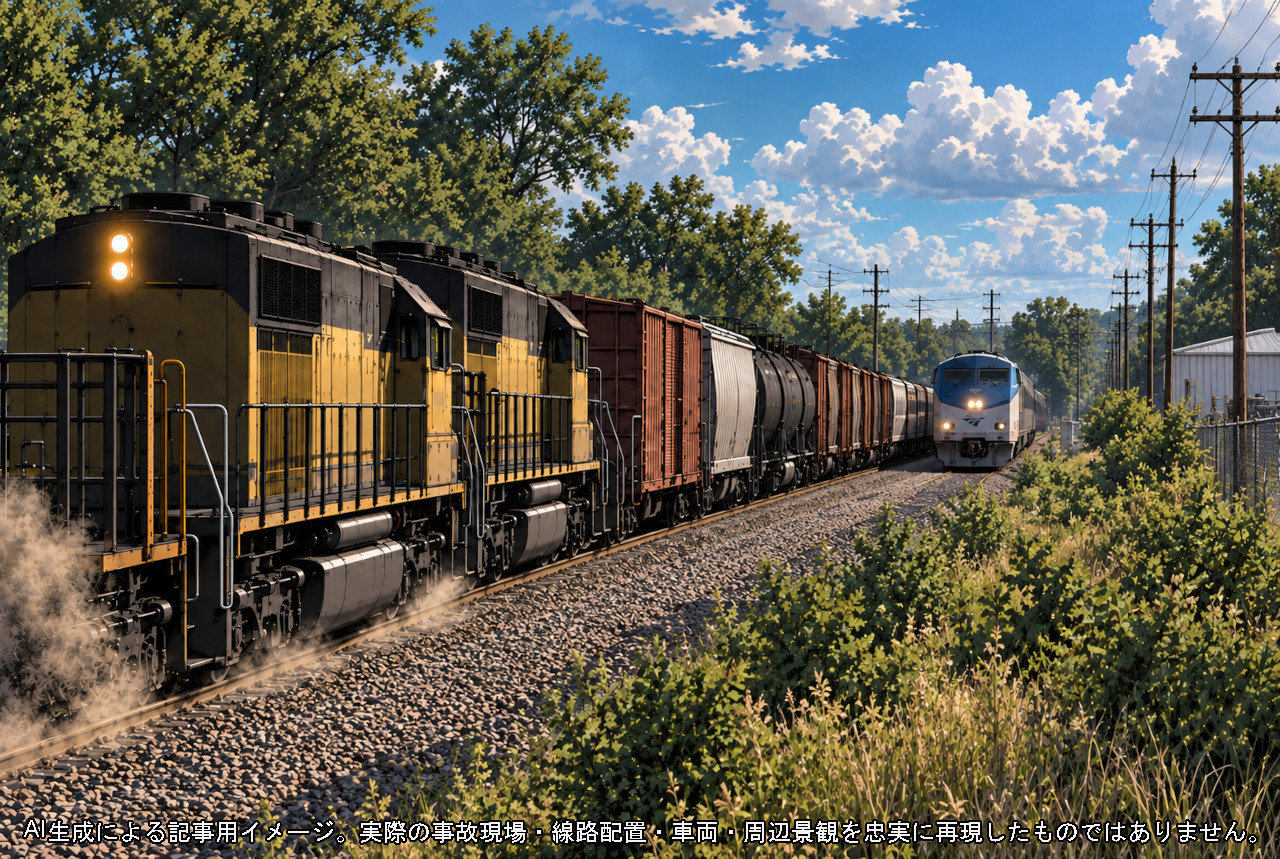
At about 11:00 a.m. on February 22, 2026, an Illinois Central Railroad Company (IC) freight train, Z19491-21, struck a stopped Amtrak train on the same track near Memphis, Tennessee, at milepost 9.6 on the Shelby Subdivision.
The freight consisted of two locomotives and 82 railcars. Amtrak 59-21 had one locomotive and seven passenger cars, carrying 118 passengers and seven Amtrak employees. The IC train was shoving north on Main Track 1 at about 10 mph when the leading end of the freight consist reached the Amtrak locomotive.
That would already qualify as a low-speed train collision. But the National Transportation Safety Board’s preliminary investigation contains a second, much stranger part.
The IC crew told investigators that they interpreted the resistance from the first collision as resistance associated with an air-brake problem. They then moved forward, reversed again, and about three minutes after the first impact, struck the same Amtrak train a second time at low speed.
Two Amtrak employees and two passengers suffered minor injuries. The bigger puzzle is obvious: how does a train hit another train once, then return and hit it again? To understand that, the accident itself is only half the story. The other half is how U.S. railroads handle switching moves, restricted-speed operation and Positive Train Control.