
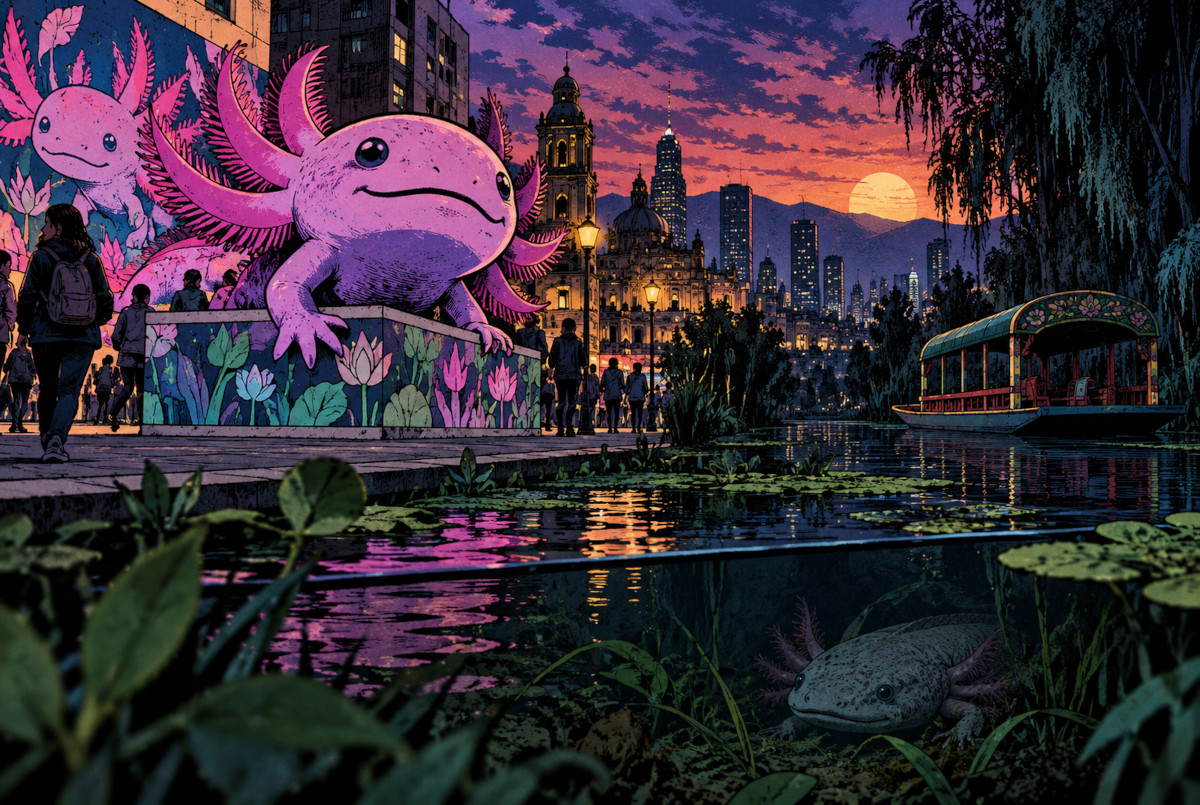
On June 8, 2026, just days before the FIFA World Cup opened, Mexico City appeared to be experiencing an unusual kind of wildlife boom.
The animal was the axolotl (Ambystoma mexicanum), the salamander native to the lakes and canals of the Valley of Mexico. They were not crawling through the streets, of course. Instead, brightly colored purple and pink axolotls were turning up on murals, public art, transit vehicles, sculptures and merchandise across the city.
At almost the same time, researchers looking for actual wild axolotls in the canals of Xochimilco were confronting the opposite situation: their survey nets were coming up empty.
In the city, axolotls seemed to be multiplying everywhere. In the wild, researchers caught none. Yet when they tested the water, the animals’ DNA was still there. That contradiction is the strange reality now surrounding one of Mexico City’s most famous native animals.