
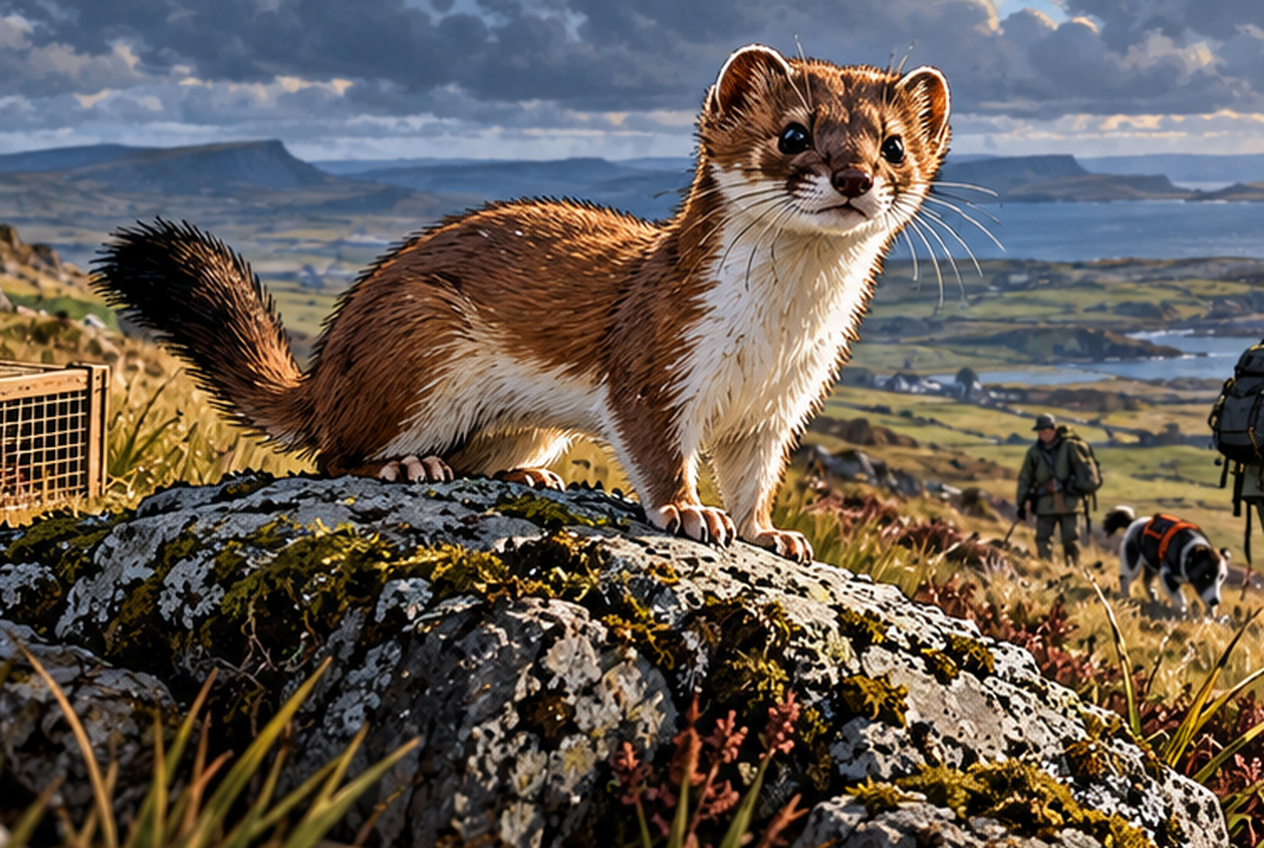
One Stoat, £148,790 in Extra Funding: Why Rousay Went on a Six-Month Hunt

オコジョ1匹に約15万ポンドの追加予算!?――AIを投入した英国の島の大捕物

On October 9, 2026, a six-month wildlife hunt on a remote Scottish island finally came to an end.

The quarry was a single stoat, a small carnivorous mammal measuring roughly 30 cm (12 inches) in body length.

Yet catching this one animal involved detection dogs, AI-assisted cameras, an extensive network of traps and an additional £148,790 in approved funding.

There was another twist: the captured stoat was male. No female had been confirmed on the island.

Why did one male stoat warrant an island-wide search and nearly £150,000 in extra funding?

A closer look at the project’s official records, local reporting and financial disclosures reveals a more complicated story than an extraordinarily expensive pest-control operation.

Read more

Mexico City’s Axolotl Boom: Everywhere in the City, Missing from the Nets

街じゅうウーパールーパー、野生は「捕獲ゼロ」――メキシコシティ“アホロートル化”の奇妙な現実

On June 8, 2026, just days before the FIFA World Cup opened, Mexico City appeared to be experiencing an unusual kind of wildlife boom.

The animal was the axolotl (Ambystoma mexicanum), the salamander native to the lakes and canals of the Valley of Mexico. They were not crawling through the streets, of course. Instead, brightly colored purple and pink axolotls were turning up on murals, public art, transit vehicles, sculptures and merchandise across the city.

At almost the same time, researchers looking for actual wild axolotls in the canals of Xochimilco were confronting the opposite situation: their survey nets were coming up empty.

In the city, axolotls seemed to be multiplying everywhere. In the wild, researchers caught none. Yet when they tested the water, the animals’ DNA was still there. That contradiction is the strange reality now surrounding one of Mexico City’s most famous native animals.

Read more