
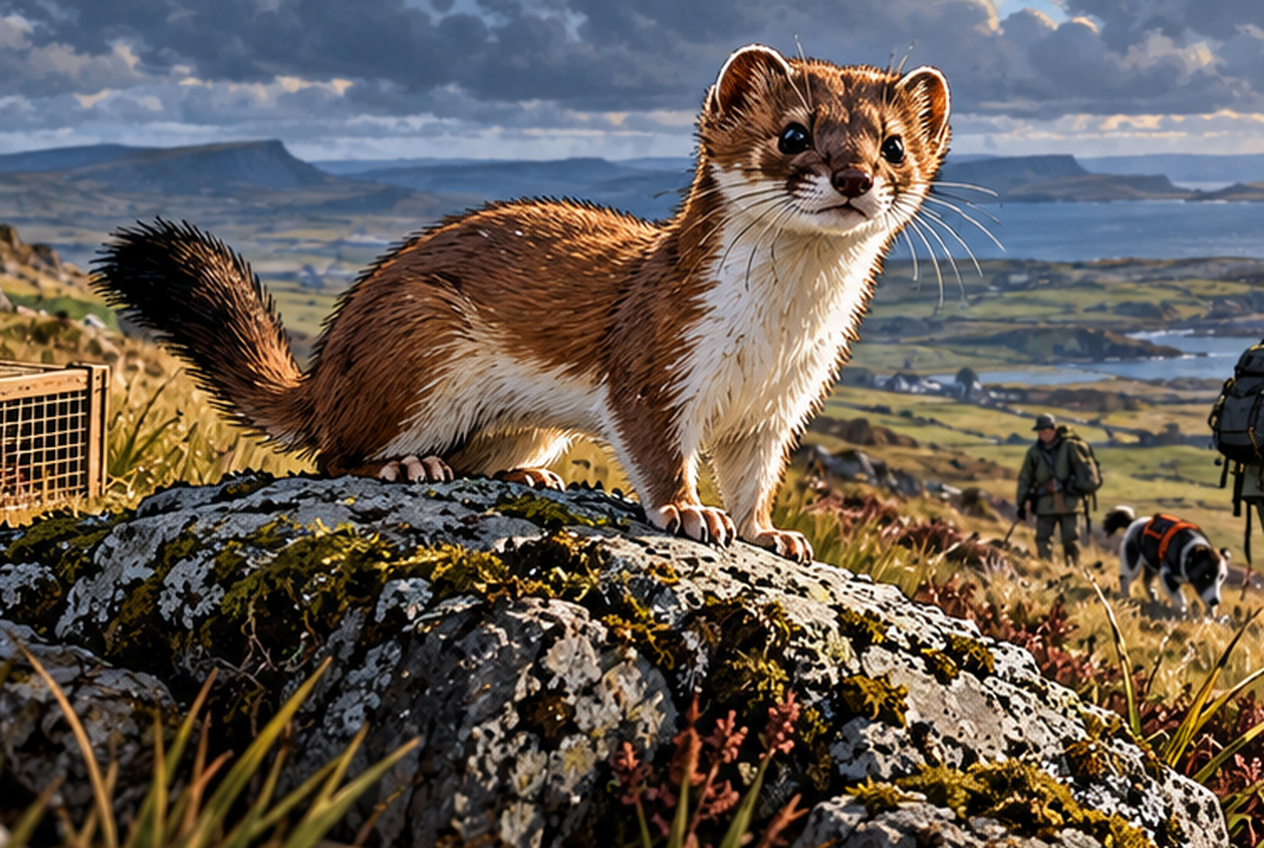
One Stoat, £148,790 in Extra Funding: Why Rousay Went on a Six-Month Hunt

オコジョ1匹に約15万ポンドの追加予算!?――AIを投入した英国の島の大捕物

On October 9, 2026, a six-month wildlife hunt on a remote Scottish island finally came to an end.

The quarry was a single stoat, a small carnivorous mammal measuring roughly 30 cm (12 inches) in body length.

Yet catching this one animal involved detection dogs, AI-assisted cameras, an extensive network of traps and an additional £148,790 in approved funding.

There was another twist: the captured stoat was male. No female had been confirmed on the island.

Why did one male stoat warrant an island-wide search and nearly £150,000 in extra funding?

A closer look at the project’s official records, local reporting and financial disclosures reveals a more complicated story than an extraordinarily expensive pest-control operation.

Read more

Why New Zealand’s DOC Gets Calls About UFOs, Cats and Seals

A UFO has fallen into the mountains. There is a black cat at the front door. Someone wants something done about possum droppings. Another person is worried about a supposed MMA fight between a human and a chimpanzee.

None of those questions went to the police, a veterinary clinic or a television station. They ended up with New Zealand’s Department of Conservation, better known as DOC.

On September 14, 2026, DOC published a selection of unusual inquiries received by its customer service team. During the 12 months ending August 31, 2026, the agency handled 42,637 phone calls and 22,394 emails. Of those calls, 2,977 were classified as unrelated to DOC’s work.

That means only about 7% of the calls were actually off-topic. So no, New Zealanders were not making 42,000 bizarre phone calls to a conservation agency. Still, the examples raise an obvious question: why does one government department end up hearing about everything from wildlife to UFOs?

Read more