
Bacon and Eggs in Cola? Just Eat’s AI Images Passed Human Review

コーラに目玉焼きが浮いた!?――AIが英国の朝食を誤解、Just Eat「人間も確認した」の謎

On October 19, 2026, British media reported that food delivery platform Just Eat had apologised for some remarkably strange menu images.

One showed what looked like a glass of cola. Floating inside were sausages, bacon and a fried egg.

No, this wasn’t an experimental breakfast drink. An AI image generator had apparently interpreted a menu item called “Breakfast Soda” as a fizzy drink containing breakfast ingredients.

Just Eat had been trialling AI-enhanced images for restaurants without photographs of their dishes. But after a series of bizarre results came to light, the company paused the rollout.

Here’s the particularly curious part: according to Just Eat, every AI-generated image had been manually checked by a person.

So what exactly did the AI misunderstand? And how did images like these get through human review? To find out, we compared local reporting with actual restaurant menus on Just Eat.


Read more

The AI Was Invited. So Why Did the Bank Call It Unauthorized?

On October 22, 2026, Axios reported a peculiar problem facing some of America’s largest banks: third-party AI agents were accessing customer accounts without the banks’ authorization.

An AI agent is more than a chatbot. It can work through a task, gather information and interact with websites or software on a user’s behalf.

In one reported case, an agent even contacted a bank to complain without consulting the account holder first.

But here’s the twist. These weren’t necessarily AI systems breaking into accounts. In some cases, the customers themselves had handed over their login credentials and invited the agents in.

Read more

One Stoat, £148,790 in Extra Funding: Why Rousay Went on a Six-Month Hunt

オコジョ1匹に約15万ポンドの追加予算!?――AIを投入した英国の島の大捕物

On October 9, 2026, a six-month wildlife hunt on a remote Scottish island finally came to an end.

The quarry was a single stoat, a small carnivorous mammal measuring roughly 30 cm (12 inches) in body length.

Yet catching this one animal involved detection dogs, AI-assisted cameras, an extensive network of traps and an additional £148,790 in approved funding.

There was another twist: the captured stoat was male. No female had been confirmed on the island.

Why did one male stoat warrant an island-wide search and nearly £150,000 in extra funding?

A closer look at the project’s official records, local reporting and financial disclosures reveals a more complicated story than an extraordinarily expensive pest-control operation.

Read more

Why Was Faladdin’s Founder Arrested? How Turkey Treated Fortune-Telling Revenue as Criminal Proceeds

AI占いの売上はなぜ“犯罪収益”とされた? Faladdin創業者逮捕と1925年のトルコ法

On July 16, 2025, Istanbul police carried out a cybercrime operation targeting companies behind mobile fortune-telling services. Sertaç Taşdelen, founder of the Faladdin and Binnaz platforms, was taken into custody that day and ordered into pretrial detention by a judge on July 17.

The investigation went well beyond whether fortune-telling itself was suspicious. Authorities imposed seizure measures on bank and electronic-money assets, vehicles, vessels, and company interests. Istanbul police said that two vehicles, two vessels, and assets connected to two companies were valued at roughly TRY 107.5 million.

The central allegation was more serious: prosecutors suspected that revenue generated through fortune-telling services had been presented as legitimate corporate income and then laundered through financial transactions.

But calling this a case of “someone getting arrested for using AI to tell fortunes” would be misleading. AI itself was not the stated reason for the arrest. What makes the case unusual is that a modern mobile app ended up at the intersection of a century-old Turkish law, cybercrime provisions, and money-laundering rules.

Read more

A Man Spent $150,000 Building an AI Version of His Dead Father — Is RichieBot Really Him?

死んだ父を15万ドルでAIにした男――「デジタル幽霊」は本人なのか、父親っぽく喋るAIなのか

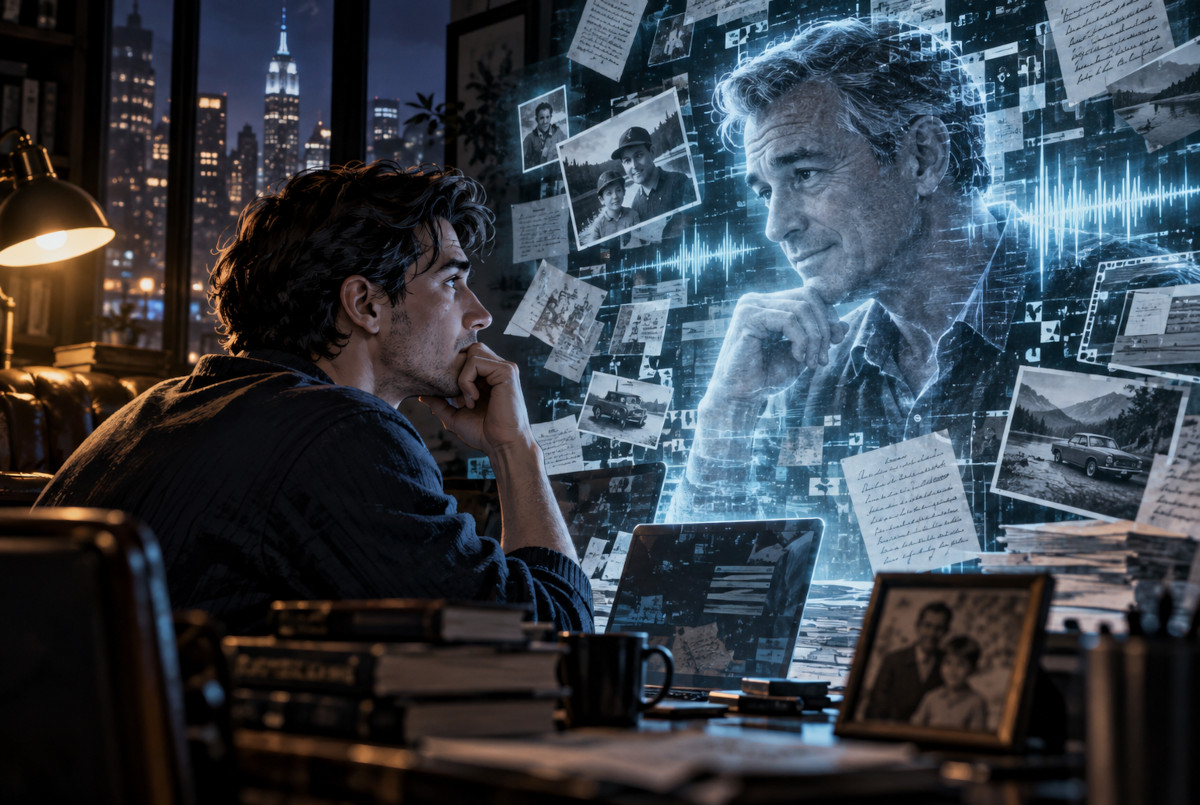
When someone dies, photographs remain. Videos remain. Their voice may remain. And now, with generative AI, something else can remain too: a version of the dead that answers back.

On July 21, 2026, at an event connected to TechChicago Week in Chicago, an unusual “father” made an appearance. Brian Dema, a Chicago marketing executive, had spent months building an AI version of his father, J. Richard Dema, who had died about four years earlier. He called it RichieBot.

The project cost about $150,000, involved 19 people over roughly six months, and used 17,500 pages of his father’s documents, along with audio and video material. This was not a science-fiction pitch. It was an actual attempt, in 2026, to reconstruct a dead person through data.

Read more

The Cloud Has an Address: Why American Towns Are Pushing Back on AI Data Centers

When people use ChatGPT, few stop to wonder where the AI answering them actually is. The technology feels almost weightless, as if it exists somewhere beyond the screen in “the cloud.”

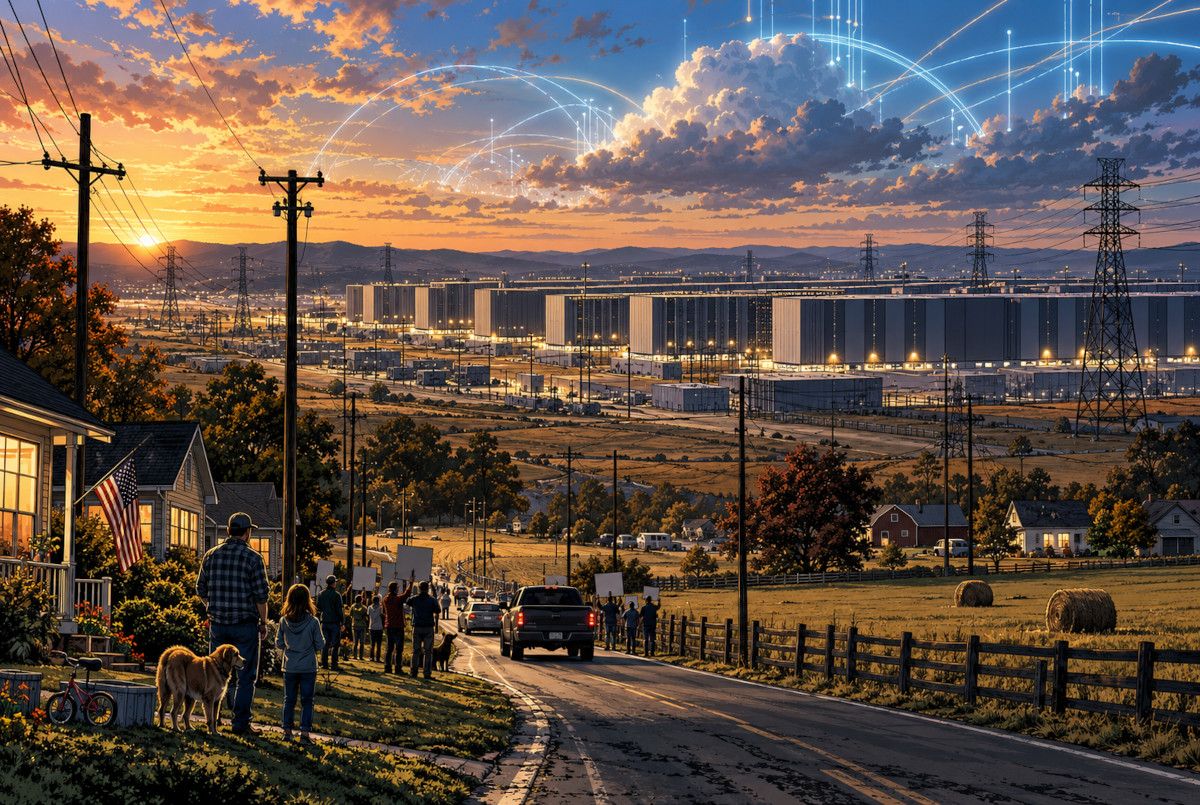
But the cloud has an address. It sits inside enormous data centers built on the edges of suburbs and rural towns, where thousands of servers consume electricity around the clock. Some facilities also require significant amounts of water for cooling, while fans, transformers and other infrastructure keep running 24 hours a day.

This article examines the data center backlash that became increasingly visible across the United States from late 2025 through September 2026. Communities began pushing back against the giant facilities that support AI and other digital services, and by the summer of 2026 protests had spread across multiple states. The dispute did not stop at environmental concerns. Some of the residents who fought data center projects began running for local office — and some had already won seats.

Read more